|
 The
geological origins of the Valdelsa are of the Pliocene period.
This is clearly evident from the fossils found in the fields,
hillsides and caves, the shells (referred to as nicchie) and
the remains of marine and land vertebrates. The
geological origins of the Valdelsa are of the Pliocene period.
This is clearly evident from the fossils found in the fields,
hillsides and caves, the shells (referred to as nicchie) and
the remains of marine and land vertebrates.
If the Francigena route influenced the evolution and course
of history luring the Middle Ages, the Cassia and the railway,
and later the Superstrada, were instrumental and played a
vital part in the economic development of the area. Not with
standing this however, there are spread throughout the countryside
natural and artistic "oases" which belong to all:
the forests, the pleasing country walks with the vineyards
and farmhouses often restructured with good taste, the chapels,
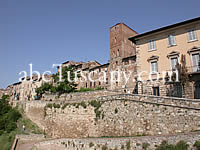
the Romanesque villages, the towers, the river banks.
 In
conclusion; this is a countryside harmonius and alive, full
of history and nature, but above all, human. The more important
centres of the Valdelsa are, starting from the south. Colle,
Staggia, San Gimignano and Poggibonsi. In
conclusion; this is a countryside harmonius and alive, full
of history and nature, but above all, human. The more important
centres of the Valdelsa are, starting from the south. Colle,
Staggia, San Gimignano and Poggibonsi.
Colle di Val D' Elsa, a city of ancient origin, probably
once Etruscan, is divided into three areas. Piano, the modern
section. Colle Alta with ancient buildings and Castello with
important monuments. Staggia Senese. with La Rocca and its
medieval walls, brings to mind a past full of battles. San
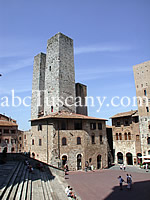
Gimignano, the city of towers. demonstrates even to this day.
in all its splendour, its ancient prestige which places it
at the avant garde of world tourism. Poggibonsi is the largest
town in the Province, with an extremely important commercial
centre.
Areas of Siena
 Val d' Elsa
Map
Accommodations
Val d' Elsa
Map
Accommodations
|
 Val d' Elsa - Siena - Tuscany Italy



